
Blog
Common Mistakes First-Time Sword Collectors Make

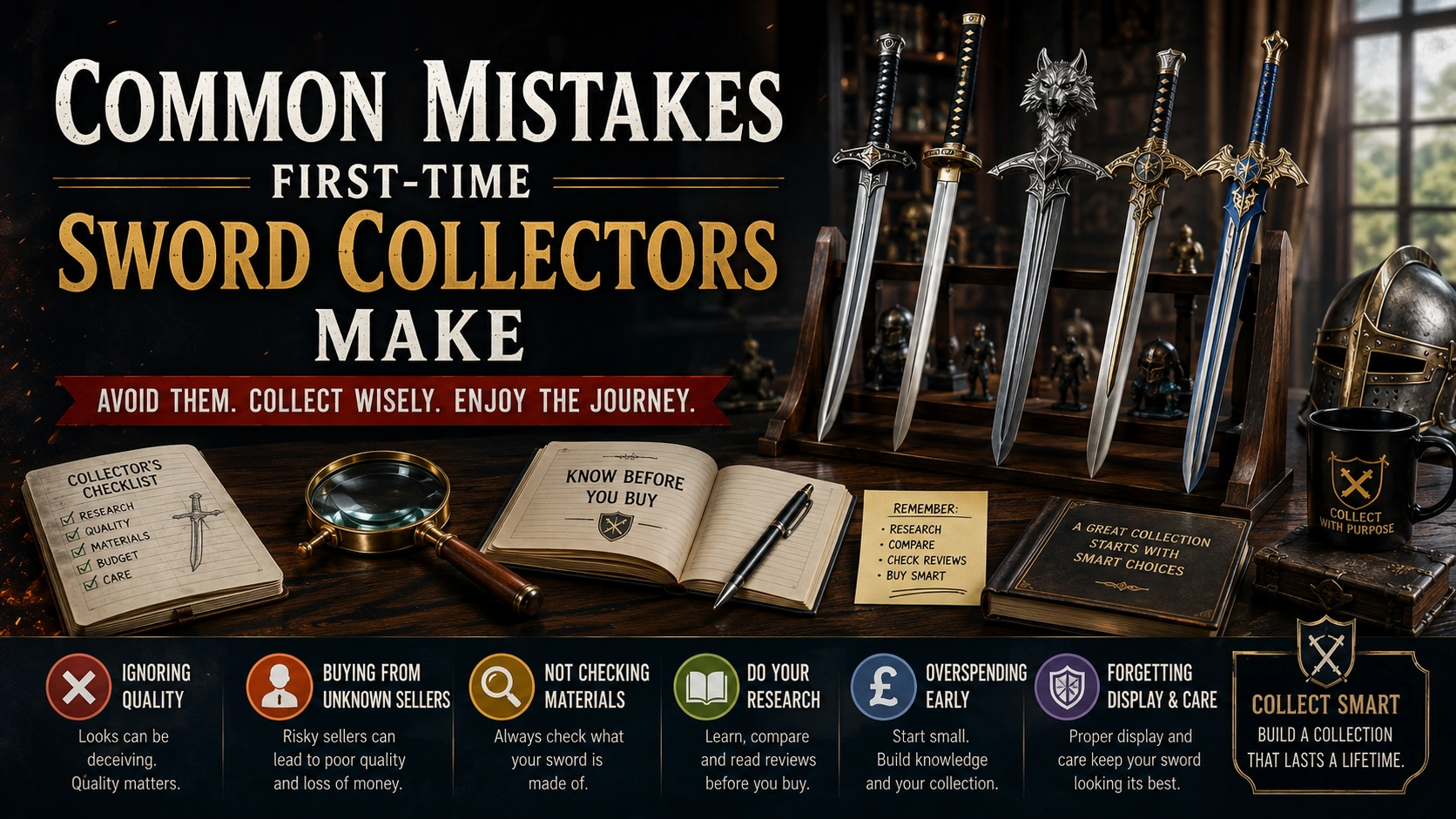
Buying your first collectable sword is a genuinely exciting moment. Whether you have been inspired by a favourite anime series, a video game, a historical period or a fantasy film, there is something deeply satisfying about holding a beautifully crafted blade for the first time and knowing it belongs to your collection. However, that excitement is also where the problems begin.
The UK sword collecting market has grown considerably over the past decade, and with that growth has come a steady stream of first-time buyers who rush into a purchase without the knowledge to make a good one. They choose based on appearance alone, buy from the first seller they find, ignore material specifications, and end up with something that disappoints them within weeks. The good news is that every mistake in this guide is completely avoidable, and the collectors who sidestep them from the start tend to build better collections, spend their money more wisely, and enjoy the hobby far more than those who learn through costly trial and error.
Why Do Many First-Time Sword Collectors Make Costly Mistakes?
The honest answer is straightforward: excitement outpaces knowledge. Most new collectors in the UK arrive at their first purchase highly motivated but with very little practical understanding of what separates a quality collectable sword from a poor one. The internet makes it easy to find swords at every price point, but it does not automatically help buyers understand what they are actually looking at. As a result, decisions get made on impulse rather than on information. The sections below address each mistake directly so that you can approach your first purchase with confidence.
Common Mistakes That Sword Collectors Make First Time:
1. Buying a Sword Without Research
The most common mistake among first-time UK sword collectors is purchasing on impulse. A sword that looks good in a photograph may have been made from poor materials, assembled without care or designed without reference to the source it claims to represent. Without research, you simply cannot tell the difference.
Before buying, invest time in understanding the sword’s background, blade type, proportions and materials. Look at multiple images from different sources rather than relying on the seller’s photographs alone. Moreover, research the seller as thoroughly as you research the sword, because a quality product from a poor seller is still a poor buying experience. Taking a few hours to research properly before committing will consistently produce better results than browsing without context.
2. Cheapest Option vs Best Value
Many first-time sword collectors believe that choosing the cheapest option will save money, but this often leads to disappointment. Low-priced swords may not offer the same level of materials, craftsmanship, or attention to detail as better-quality options. Instead of focusing only on price, consider the overall value you are getting. A well-made sword with durable materials and a good finish can provide a much better collecting experience and last for years. Compare features, read customer reviews, and buy from a trusted retailer. Spending a little more on quality often gives you better value and greater satisfaction in the long run.
3. Ignoring Blade Materials
Blade material directly affects everything from visual finish to long-term durability to the maintenance a sword will require in the UK climate, yet it is one of the things new collectors most consistently overlook. Understanding the four most common blade materials before you buy will help you make a significantly better decision.
Stainless Steel
Stainless steel is the most widely used material in display collectable swords. It is corrosion-resistant, requires minimal maintenance, and holds its polished appearance well over time, making it particularly well-suited to the UK’s relatively humid climate. For collectors who want a sword that looks impressive without regular upkeep, stainless steel is typically the right choice.
Carbon Steel
Carbon steel achieves a sharp, durable edge and is the traditional choice for collectors who value historical authenticity. However, it requires more consistent care than stainless steel, particularly in the UK where humidity levels are high enough to cause surface oxidation if the blade is not oiled regularly. If you choose a carbon steel collectable, factor ongoing maintenance into your decision.
Spring Steel
Spring steel is known for its flexibility and resilience under stress, making it considerably more durable than either stainless or standard carbon steel. It is the preferred material for functional use rather than pure display and is worth understanding if you are focused on historically accurate replicas.
Damascus Steel
Damascus steel is highly prized among collectors for its distinctive layered patterns, which make each blade genuinely unique. Many collectors acquire Damascus blades as display pieces or long-term investments, and rare patterns, handmade craftsmanship, and maker reputation can all raise the price considerably. For UK collectors who prioritise visual impact, it represents a premium option that rewards the investment.
4. Build Quality:
A high-quality collectable sword is not simply a well-made blade. It is a complete assembly where every component contributes to the overall standard. Before purchasing, examine the guard, which should be firmly fitted with no movement or wobble. The handle wrapping should be tight, even and securely attached, as loose or uneven wrapping deteriorates quickly.
Fittings including the pommel, collar and decorative elements should be consistently finished with no rough edges or visible tool marks. The scabbard, where included, should fit snugly and match the sword’s overall aesthetic. Finally, the overall finish should look the same in person as it does in product photographs, because a product made to a genuine standard will never rely on dramatic lighting to hide its shortcomings.
5. Buying from Untrusted Sellers:
Choosing an unknown or poorly established retailer is one of the most reliable ways to have a poor collecting experience regardless of how good the product listing looks. Your experience after purchase, including delivery, packaging, customer support and return options, depends entirely on the retailer rather than the manufacturer.
Read Customer Reviews
Look for reviews that specifically mention delivery condition, packaging quality, accuracy of product descriptions and the responsiveness of customer service when something goes wrong. Pay attention to how the retailer responds to negative reviews, as this reveals as much about their standards as the positive feedback does.
Check Product Specifications
A retailer confident in its products will provide clear, complete specifications including blade material, overall length, blade length, weight and handle material. Vague descriptions that emphasise appearance over substance are a consistent indicator of a retailer that does not want you to look too closely.
Look for Clear Product Images
Quality retailers provide multiple images from different angles in consistent lighting. A seller who relies on a single promotional image or heavily edited photographs that obscure construction details is not giving you the information you need to make a good decision.
Review Return Policies
Before purchasing, read the returns policy carefully and make sure you understand your rights under UK consumer law. A retailer whose policy is difficult to find or structured to discourage returns is telling you something important about their confidence in what they sell.
6. Collecting Without a Theme
Building a collection without any organising principle is one of the less obvious mistakes new UK collectors make. Without a theme, it is easy to buy individual swords that appeal in the moment without considering how they fit together, and the result is typically a group of unrelated pieces that lack coherence and visual impact.
A themed collection is more meaningful, easier to add to intelligently, and more likely to retain value over time. The best theme is the one that connects most directly to your existing interests.
Historical Swords
Historical swords are a great choice for collectors who enjoy history and traditional craftsmanship. These swords are from famous periods, cultures, and legendary warriors. Choosing historical swords as your theme helps create a well-organised collection with lasting interest and educational value.
Medieval Swords
Medieval swords are a popular choice for collectors who admire knights, castles, and European history. From longswords to broadswords, these designs reflect the style of the Middle Ages. Collecting medieval swords gives your collection a clear focus and a timeless historical appeal.
Samurai Swords
Samurai swords are admired for their elegant design and rich Japanese heritage. Popular styles include the katana, wakizashi, and tanto. Choosing samurai swords as your collecting theme helps you build a collection that celebrates traditional craftsmanship, culture, and timeless beauty.
Viking Swords
Viking swords are a favourite among collectors who enjoy Norse history and legendary warriors. They are known for their simple yet powerful designs and historical significance. Adding Viking swords to your collection creates a strong theme and brings a piece of early medieval history to your display.
Movie Replica Swords
If you are a fan of famous films, movie replica swords are an excellent theme for your collection. They are inspired by iconic swords seen on screen and are loved by collectors around the world. Choosing movie replica swords helps you build a collection that reflects your favourite characters and unforgettable film moments.
Anime Replica Swords
For anime fans, anime replica swords are a fun and exciting way to start a collection. They are inspired by famous characters and popular series, making them great display pieces. Choosing anime replica swords as your theme helps you build a collection that celebrates your favourite anime adventures and iconic designs.
Fantasy Swords
If you enjoy fantasy stories, fantasy swords are a great theme for your collection. These swords are inspired by popular films, games, and legendary characters. With their unique designs and detailed craftsmanship, they make impressive display pieces and help you build a collection that reflects your favourite fantasy worlds.
Video Game Swords
Video game sword collecting is one of the fastest-growing themes in the UK market, with titles including God of War, The Legend of Zelda, Final Fantasy and Devil May Cry driving strong collector demand.
7. Forgetting About Proper Sword Storage and Display
Many first-time collectors focus entirely on acquiring swords without carefully planning how they will store and display them. Improper storage or poor mounting causes swords to deteriorate more quickly, increases the risk of accidental damage, and makes them look far less impressive than swords displayed with proper care.
Wall Displays
Wall mounting is the most visually impactful display option for UK collectors. Before mounting any sword, identify the wall type accurately. Older UK homes typically have solid brick or masonry walls, while modern builds more commonly feature plasterboard on a timber frame, each requiring different fixing approaches. Always use fixings rated to at least twice the weight of the sword being mounted and locate a stud or solid backing before drilling.
Display Stands
Desktop and floor-standing display stands are ideal for collectors who rent their home, prefer not to make wall fixings or want the flexibility to rearrange their collection easily. Multi-tier racks allow several swords to be displayed together in a compact and attractive arrangement.
Display Cabinets
Enclosed display cabinets offer the highest level of protection, keeping blades free from dust and reducing the humidity fluctuation that can affect steel blades in a UK home. You can display your collection in glass-fronted cabinets while avoiding frequent handling.
Storage Tips
Keep swords that are not on permanent display in appropriate storage. Avoid leaning them against a wall or laying them flat without support, as both positions can damage the blade over time. Store swords horizontally on padded supports or vertically in a purpose-made rack, and ensure any storage location is reasonably dry.
8. Neglecting Basic Sword Maintenance
Even collectable swords that will never be used functionally benefit from basic regular maintenance. First-time collectors often assume that a display piece requires no care after purchase, but this assumption leads to gradual deterioration that is entirely preventable with minimal effort.
Cleaning
Wipe the blade with a soft, clean microfibre cloth after any handling. The natural oils from human skin are acidic enough to cause surface marks on both stainless and carbon steel blades over time, and regular wiping after contact prevents this entirely.
Dust Protection
Dust accumulates on blade surfaces continuously in a typical UK home and, if left for extended periods, can bond with surface oils to create a film that dulls the blade’s finish. A quick wipe with a dry microfibre cloth monthly is sufficient for most display swords.
Moisture Prevention
Carbon steel requires regular care against the UK’s humidity levels. Apply a thin layer of sword oil or food-grade mineral oil to carbon steel blades every two to three months and more frequently in rooms that experience significant humidity variation. Stainless steel blades are considerably more forgiving but still benefit from occasional light oiling.
Safe Handling
Always handle a collectable sword with clean, dry hands or cotton gloves and avoid gripping the blade directly where possible. Treating every sword as if it has a functional edge is simply a sensible habit for any collector, regardless of the blade’s intended purpose.
9. Buying Too Many Swords Too Quickly
The enthusiasm of early collecting often leads first-time buyers to make rapid purchases without giving adequate thought to each acquisition, and this is one of the most common reasons collectors end up with pieces they later regret. Building a collection slowly and deliberately is almost always more satisfying than building one quickly.
Each sword considered carefully becomes an opportunity to deepen your understanding of materials, construction, design, and value. Furthermore, spacing purchases over time lets you discover whether a sword you were excited about in week one still appeals by month three. Establishing a clear budget, deciding on a theme before purchasing, and committing to thorough research for each acquisition will consistently produce a collection worth being proud of.
10. Ignoring Product Specifications
Product specifications contain the practical information that determines whether a sword will actually meet your expectations, yet first-time buyers frequently skip them in favour of images and price. Before purchasing, pay specific attention to overall length and blade length, as these determine whether the sword will fit your display space and match your expectations for scale.
Note the weight, particularly for larger replicas, since a heavier sword may require mounting hardware beyond what you already have. Check what is included with the sword, as some products include a scabbard, display stand, or certificate, while others are blade-only. If any specification is unclear or absent, contact the retailer before purchasing. A reputable UK sword retailer will answer specification questions promptly and honestly.
11. Buying Without Knowing UK Sword Laws
This is the mistake with the most serious potential consequences, and it is one that a meaningful number of first-time UK collectors make simply because they do not know there is anything to check.
Why Legal Knowledge Matters
Replica swords used for decorative purposes or cosplay are generally legal to own in the UK, provided they are non-sharp and not intended for combat use. Additionally, curved blades longer than 50 centimetres have been subject to specific restrictions under UK law since 2008, with certain exemptions available for antiques and traditionally made swords. Many Japanese sword replicas, especially katana-style blades, fall within this category. Buying a restricted curved sword from an unaware seller is not a legal defence in the UK.
Age Restrictions
In the UK, it is legal to buy and own a sword if you are over the age of 18. UK law requires retailers to verify buyers’ ages before completing a sale. Avoid any retailer that does not follow this legal requirement.
Delivery Requirements
Age verification at the point of delivery is a legal requirement for many blade types, which is why reputable UK retailers use delivery services that require a signature from an adult. If a seller does not mention delivery age verification, query this directly before purchasing.
Responsible Ownership
Keep your swords within your private residence, and only take them into public spaces for a valid and legitimate reason. For collectors, responsible ownership means keeping your collection at home and transporting any sword only when there is a clear legitimate reason for doing so, such as attendance at a registered cosplay event. Every reputable UK sword retailer will be transparent about the legal requirements surrounding the products they sell and will provide clear guidance on compliance.
How Do I Know if a Sword Seller is Trustworthy?
First-time UK collectors ask this question more than almost any other, so it deserves a direct answer.A trustworthy UK sword retailer will have a clear and professional website with complete product information, multiple genuine product images from several angles, and verifiable customer reviews that discuss the complete buying experience.
They will be transparent about UK legal requirements and have documented processes for age verification and compliant delivery. Their returns policy will be clear and fair, and their customer service will be responsive and knowledgeable when you ask questions before purchasing. If any of these elements are missing when you are evaluating a seller, treat that absence as meaningful information. The UK market contains excellent retailers who meet all of these standards consistently, and there is no need to compromise on any of them.
Final Thoughts:
Building a sword collection you are genuinely proud of is entirely achievable from your very first purchase. The collectors who do well take the time to learn, approach each purchase with patience, and choose quality and honesty over price. Every mistake covered in this guide is avoidable with a modest investment of time before you buy.
Research the sword, understand the materials, evaluate the seller, know the law, and give your collection a coherent direction from the beginning. These straightforward habits will produce a collection that rewards you for years rather than a shelf of regrets. If you are ready to begin or expand your UK sword collection, explore the full range at swordskingdom.co.uk. Every product includes transparent specifications and genuine customer reviews. We also offer free delivery across the United Kingdom.