
Blog
Video Game Swords Inspired by Real Historical Blades — A UK Perspective

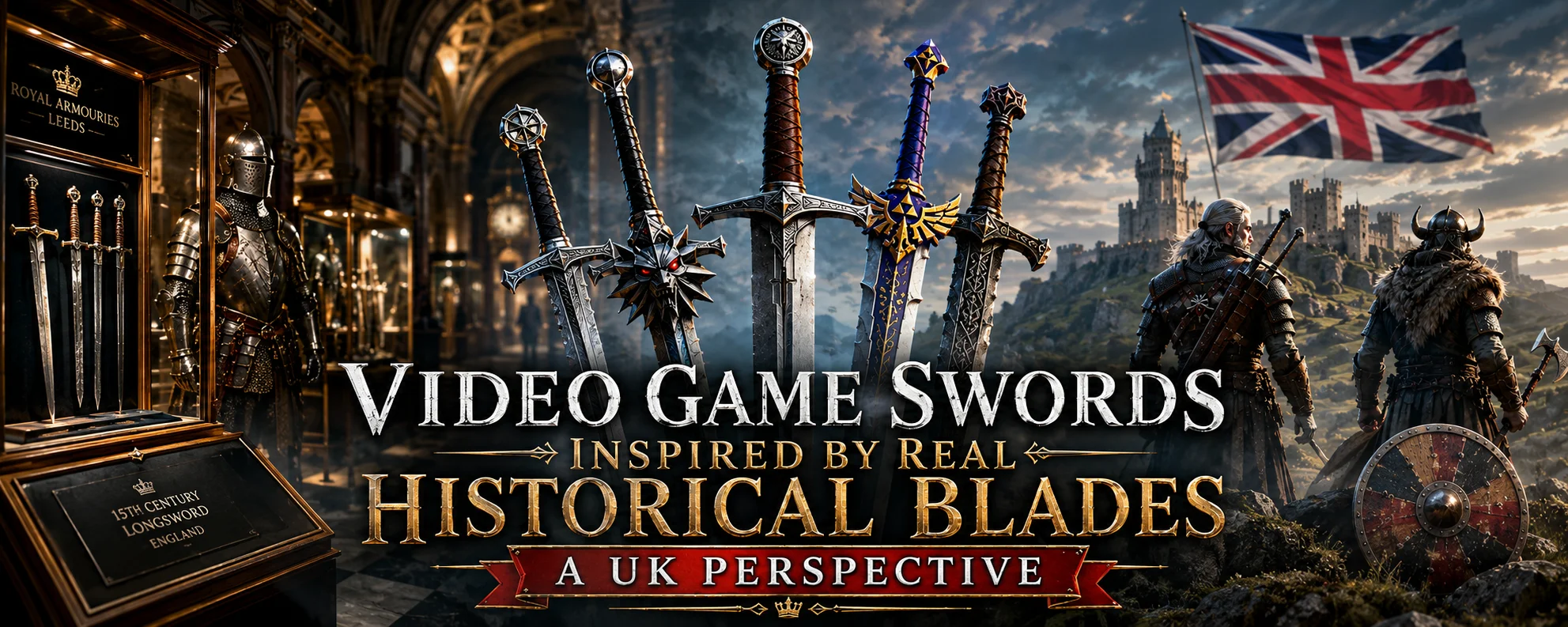
Some of the most famous video game swords may look like pure fantasy, but many of them have roots in real history. For decades, game designers have taken inspiration from historical weapons, legendary warriors, and museum collections to create blades that feel powerful, believable, and memorable. From medieval longswords to Viking-era weapons, the influence of real craftsmanship can be seen in many of gaming’s most iconic swords.
This topic is especially interesting for UK readers because Britain is home to some of Europe’s most important sword collections. Museums such as the British Museum, the Royal Armouries in Leeds, and the Wallace Collection in London preserve remarkable examples of historical blades that have inspired stories, films, and games alike. In many cases, a short visit to one of these museums can bring you face to face with weapons that resemble the swords used by your favourite game characters.
Rather than ranking the best swords in gaming, this article explores the fascinating connection between real historical blades and the legendary swords that have captured players’ imaginations on screen.
How Game Designers Use History to Build Legendary Blades?
The most memorable video game swords often feel larger than life, but their origins are usually grounded in real history. Game developers frequently explore historical records, museum collections, folklore, and cultural traditions when designing weapons for their worlds. By blending historical inspiration with creative ideas, they create swords that feel authentic yet fit fantasy, action, and role-playing settings.
1. Direct Visual Copying
Many game swords are influenced by the appearance of real historical blades. Designers study details such as blade shape, crossguards, pommels, engravings, and proportions to make weapons look believable. Even when a sword is given fantasy features, its overall design often reflects the craftsmanship and style of weapons used by medieval knights, Viking warriors, or Renaissance soldiers.
2. Mythological Borrowing
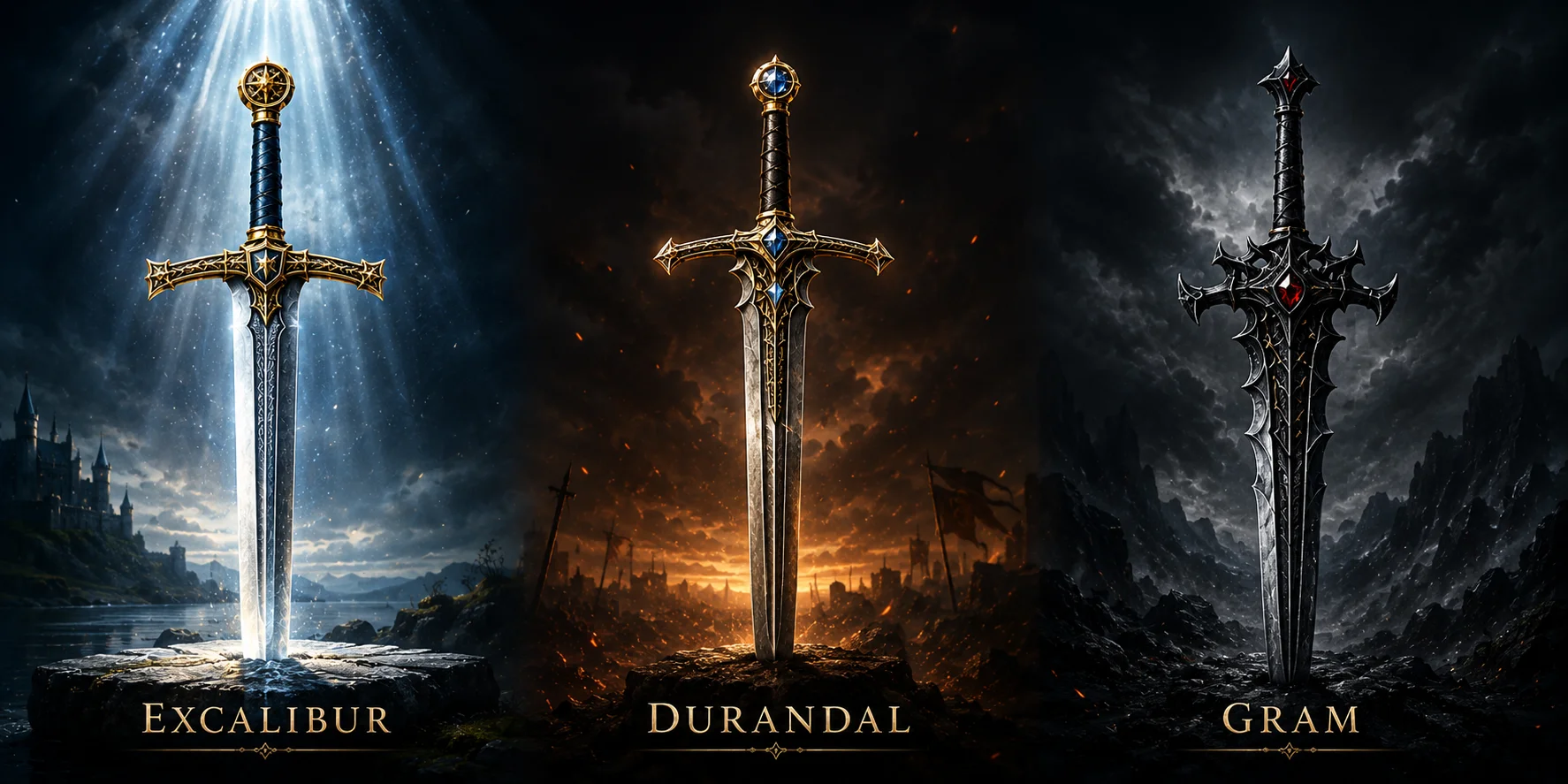
Many iconic video game swords draw inspiration from myths and legends. Stories about magical blades such as Excalibur, Durandal, and Gram have influenced countless games. Designers borrow names, powers, and legendary backgrounds from these tales to create weapons that instantly feel important within a game’s world.
3. Philosophical Borrowing
A sword’s importance in a game is not always based on its appearance. Throughout history, swords have represented leadership, courage, honour, and responsibility. Designers often incorporate these symbolic meanings into their creations, allowing a blade to reflect a character’s role, beliefs, or personal journey. This deeper connection helps transform a simple weapon into a memorable part of the story.
Ancient and Medieval Roots — The Historical Periods That Shaped Gaming Swords Most
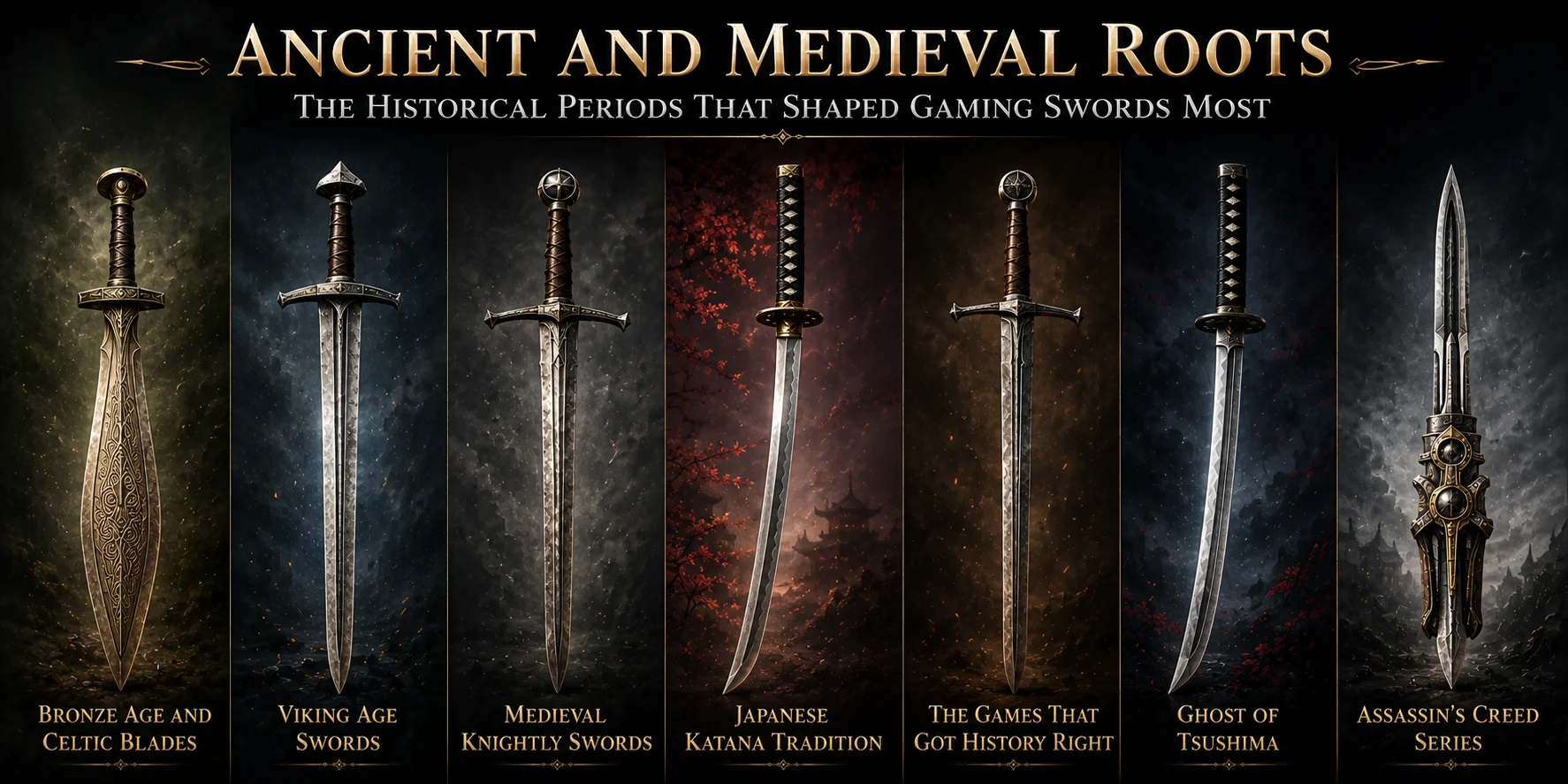
Many of the swords seen in modern video games can trace their origins back to the ancient and medieval worlds. Game designers often look to history for inspiration because real swords already have proven shapes, cultural significance, and fascinating stories behind them. From the leaf-shaped blades of the Bronze Age to the knightly longswords of medieval Europe and the elegant katanas of Japan, these historical designs continue to influence gaming today.
Ancient civilisations developed some of the earliest sword styles, creating blades that balanced function, craftsmanship, and symbolism. During the medieval period, sword design became even more advanced, producing iconic forms that are instantly recognisable in fantasy and role-playing games. Whether exploring a dungeon, battling mythical creatures, or embarking on a heroic quest, players often carry swords inspired by real historical examples. These ancient and medieval traditions remain the foundation of many of gaming’s most memorable blade designs.
1. Bronze Age and Celtic Blades — Where Zelda’s Aesthetic Begins
The design of many early Zelda swords shares surprising similarities with real Bronze Age and Celtic blades discovered across Britain. Celtic swordsmiths often created leaf-shaped weapons with smooth curves and balanced proportions, giving them a distinctive and elegant appearance. This organic style is evident in several fantasy sword designs throughout the Zelda series. Visitors to the British Museum can find Celtic sword that look remarkably similar to the type of blades that might appear in a Zelda dungeon or ancient temple. Even the famous Master Sword features design elements that echo traditional Celtic metalwork, particularly in its decorative crossguard and symmetrical shape. These historical influences help give Zelda’s weapons a timeless and legendary feel.
2. Viking Age Swords — The Ancestor of Half the Swords in Gaming
If one historical sword has influenced modern video game design more than any other, it is the Viking sword. Its straight double-edged blade, simple crossguard, and balanced proportions have inspired countless sword designs seen in games such as Skyrim, Dark Souls, and many other fantasy adventures. Real Viking swords discovered across Britain, particularly in Yorkshire and parts of Scotland, share many of the same characteristics found in popular gaming blades today. The Royal Armouries in Leeds houses several authentic Viking Age swords that reveal just how skilled Viking craftsmen were. Their clean, practical, and elegant design became the foundation for many fantasy swords, helping establish the classic blade style that continues to appear in video games around the world.
3. Medieval Knightly Swords — The Foundation of Western Fantasy Gaming
The arming sword and longsword of medieval Europe inspired many of the fantasy swords seen in video games today. For centuries, knights carried these blades, and their designs continue to influence game developers. Many swords used by heroes in popular games share the same shape, balance, and proportions as real medieval examples.
Visitors to the Wallace Collection in London and the British Museum can see authentic medieval swords that closely resemble blades featured in games such as Assassin’s Creed and Kingdom Come: Deliverance. One of their most recognisable features is the cruciform crossguard, a cross-shaped hilt design commonly found on medieval swords. Over time, this style became associated with bravery, honour, and heroic adventures. As a result, it has become one of the most familiar sword designs in Western fantasy gaming and continues to appear in countless games.
4. Japanese Katana Tradition — The Other Half of Gaming’s Sword Language
While medieval European swords shaped much of Western fantasy gaming, the Japanese katana influenced game design in a very different way. In Japanese culture, a sword was often seen as more than a blade—it represented the skill, discipline, and spirit of its owner. This idea has had a major impact on the storytelling of many JRPGs and action games.
Real katana-making techniques also appear in modern games. Features such as differential hardening, the distinctive hamon line, and tamahagane steel are accurately represented in titles like Ghost of Tsushima and Sekiro: Shadows Die Twice. These details help create a stronger connection to Japanese history and craftsmanship. In the UK, interest in Japanese swords remains strong, with organisations such as the Japanese Sword Society of Great Britain helping enthusiasts learn more about this fascinating tradition.
5. The Games That Got History Right
Some video games stand out for their strong connection to real history. Instead of relying solely on fantasy, these games draw on historical research to create authentic sword designs, settings, and characters. Popular titles such as Ghost of Tsushima, Assassin’s Creed, Kingdom Come: Deliverance, and Mount & Blade draw inspiration from real historical periods and cultures.
Developers often study historical records, museum collections, and traditional craftsmanship to make their games feel more realistic. As a result, players can see sword designs and fighting styles that reflect genuine historical influences. Although these games include some creative elements, they still provide a fascinating look at the past. By combining entertainment with historical inspiration, they help players appreciate the real stories, craftsmanship, and traditions behind many of gaming’s most memorable swords.
6. Ghost of Tsushima — The Most Historically Accurate Gaming Sword Experience
Ghost of Tsushima stands out for its strong connection to real Japanese sword culture and history. To create an authentic experience, developer Sucker Punch studied historical sources and consulted experts on Japanese traditions. The swords featured in the game are inspired by real tachi and uchigatana designs from the Kamakura period, reflecting accurate shapes and proportions. What makes the game especially impressive is its attention to detail, from realistic draw movements to historically inspired cutting techniques and blade profiles. For UK players interested in Japanese history, craftsmanship, and sword culture, Ghost of Tsushima offers a fascinating blend of entertainment and historical inspiration.
7. Assassin’s Creed Series — A British History Lesson in Gaming Form
The Assassin’s Creed series has introduced millions of players to historical cultures, locations, and sword designs from different periods. For many UK gamers, it offers a unique way to explore the past while experiencing exciting adventures. Games such as Assassin’s Creed Origins and Assassin’s Creed Odyssey feature blade styles inspired by real Egyptian and Greek designs, with a level of historical accuracy that helps bring these ancient worlds to life.
The latest major entry, Assassin’s Creed Shadows, explores Japan’s Sengoku period and includes detailed depictions of Japanese sword culture that many history enthusiasts have appreciated. The series also features the famous Hidden Blade, inspired by real concealed blade mechanisms that appeared in various forms throughout history. By blending historical research with storytelling, Assassin’s Creed continues to make history engaging and accessible for modern players.
The Witcher Series — Eastern European Blade History Through a British Lens
The Witcher series introduces players to sword styles inspired by Central and Eastern European history, which many UK gamers may not often come across outside of games. The designs feel unique compared to the more familiar British medieval or Japanese sword traditions, giving the series a distinct identity.
Geralt’s silver sword, in particular, is influenced by real sword-making traditions from Poland and the Czech regions during the 14th and 15th centuries. While the silver concept is fantasy-based, the overall shape and structure reflect historical European craftsmanship.
For many UK players, The Witcher was an introduction to this lesser-known sword heritage. Interestingly, collections such as the Wallace Collection in London also hold Central European swords that share similar designs, showing how closely the game draws on historical influences.
Dark Souls — Medieval European Sword History as Game Mechanic
Dark Souls stands out because its sword designs and combat system are closely inspired by real medieval European blade types. Instead of treating swords as purely fantasy items, the game organizes them into real historical categories, such as straight swords, curved swords, greatswords, and ultra greatswords. These groupings feel very similar to how swords were understood and used in real history.
FromSoftware also studied medieval combat ideas when designing gameplay. This is reflected in how different blades feel in action, including their weight, swing speed, and stamina use. Heavier swords feel slower but more powerful, while lighter ones are quicker and more controlled, just like real combat considerations.
In the UK gaming community, Dark Souls is especially appreciated by players with an interest in sword history. Many British fans often discuss how closely certain in-game designs and mechanics relate to real medieval European traditions.
The Legendary Swords — When Myth Becomes a Gaming Iconic Blade
Legendary swords in video games are often inspired by real history, myths, and cultural stories. Over time, these ideas are transformed into powerful in-game blades that represent heroism, destiny, or great power. Famous examples like Excalibur, Masamune, and medieval knightly swords show how real legends and historical designs influence gaming. Developers mix fact and fiction to create swords that feel meaningful and memorable. For UK players, many of these blades connect strongly with British and European history, making the experience more familiar. This blend of myth and history helps turn simple swords into iconic gaming symbols.
Excalibur — Britain’s Own Sword in a Hundred Games
Excalibur is one of the most famous legendary swords in all of gaming, appearing in many titles such as Final Fantasy, Fate series, and others. It has become a symbol of ultimate power and heroism across different game worlds.
What makes Excalibur special is its British origin. The legend comes from Arthurian stories, so UK players often feel a stronger connection to it compared to other mythical swords. This gives it a unique place in gaming culture.
There is also ongoing debate about whether Excalibur was inspired by real Dark Age British swords, even if no exact historical match exists. Different games also interpret Excalibur in different ways, sometimes linking it to the Lady of the Lake, sometimes to the Sword in the Stone, and often as a divine or magical blade.
Masamune and Muramasa — Real Japanese Swordsmiths in Gaming Form
Masamune and Muramasa were real Japanese swordsmiths, and their names are now widely used in video games. In gaming, Masamune is often depicted as a perfect, beautiful sword that represents balance and great craftsmanship. In contrast, Muramasa is usually described as a cursed or dangerous blade, based on old Japanese legends that said these swords were violent. These ideas come from real cultural stories in Japan and have been adapted into many games. Together, they show how history and mythology continue to inspire modern sword designs in gaming.
Caliburn and the Sword in the Stone — Gaming’s Most Borrowed British Legend
The legend of Caliburn and the Sword in the Stone is one of the most reused stories in video games inspired by British history. In Arthurian tradition, some versions separate Caliburn from Excalibur, while others treat them as the same sword. Because of this, games often either keep them distinct or combine them into one legendary blade.
Different games handle this in different ways—some stay closer to the original myths, while others simplify the story for gameplay and storytelling purposes.
The “sword in the stone” idea itself may have roots in older Celtic and Roman traditions in Britain, where swords symbolised leadership and rightful rule. For UK players, this legend feels more personal, as it is part of national cultural heritage rather than just a fantasy idea found in games.
Where UK Gamers Can See the Real Blades
UK gamers interested in sword design and history can see many real-life inspirations behind video game blades in some of the country’s top museums. Places like the Royal Armouries in Leeds, the Wallace Collection in London, and the British Museum display swords from different eras, including Viking, medieval European, and ancient Celtic periods. These collections show how real craftsmanship influenced the designs seen in many popular games today.
In Scotland, the National Museum in Edinburgh offers authentic Highland swords and claymores, often linked to fantasy and action games. Visiting these museums helps gamers connect what they see on screen with real historical objects, making the experience both educational and engaging.
The Royal Armouries Leeds
The Royal Armouries in Leeds is one of the most important collections of historical swords in the UK outside London. It displays a wide range of real examples, including medieval European swords, Viking Age blades, and Japanese swords, as well as many other historical pieces from around the world.
For UK gamers, it is a great place to see the real-life inspiration behind many video game swords. The museum helps show how these designs developed over time and how closely some gaming blades are linked to history.
It is also very accessible because entry is free, making it easy for anyone to visit. The Tournament Gallery and War Gallery are especially popular, as they feature swords and armour that feel similar to what players often see in historical and fantasy games.
The Wallace Collection, London
The Wallace Collection in London is home to one of the finest displays of medieval and Renaissance European swords and armour in the world. It is located in central London and offers free entry, making it very accessible to UK visitors, including gamers seeking historical inspiration.
The museum features many sword types that closely resemble designs seen in video games, such as swept-hilt rapiers, two-handed swords, and medieval arming swords. These pieces show how real craftsmanship influenced later artistic styles.
What makes it especially appealing to gamers is its highly decorative detail. Many of the swords are beautifully designed, reflecting the same ornate visual style often seen in modern gaming artwork and fantasy sword design.
The British Museum
The British Museum holds one of the most important collections of ancient artefacts in the UK, including Celtic and Bronze Age blades that strongly connect to early fantasy sword design in video games. These ancient pieces show how early craftsmen shaped metal into both practical and symbolic forms.
One of the standout examples is the Battersea Shield, along with other Celtic metalwork. Its detailed patterns and flowing designs highlight a decorative style that continues to influence fantasy sword aesthetics in modern gaming.
For UK gamers, visiting the museum can be especially interesting because many designs feel familiar. With gaming knowledge, it becomes easier to notice how real historical craftsmanship has inspired the swords, symbols, and visual styles seen in today’s most popular games.
Scottish National Museum Edinburgh
The Scottish National Museum in Edinburgh displays real Highland swords, including claymores and broadswords that played an important role in Scotland’s history. These swords closely resemble those seen in video games like Dark Souls and Assassin’s Creed, where similar large and powerful designs are often used. The Highland sword tradition is known for its distinctive style and strong cultural importance in Europe. For UK gamers, the museum is especially interesting because it lets them see the real historical versions of blades they may have first encountered in games, connecting the gaming experience with authentic Scottish history.
What History Gets Wrong That Games Get Right?
Some video games actually represent sword use more realistically than many films. For example, Ghost of Tsushima shows draw-and-sheath movements that are closer to real Japanese sword handling than most Hollywood portrayals. In Dark Souls, the way different swords feel heavier or lighter reflects real differences in balance and combat style more accurately than many action movies. The Witcher series also includes sword care and maintenance details based on historical practices.
However, games still make common mistakes. Swords rarely clash with sparks in real combat, even though this is often shown for visual effect. Real swords are also lighter than many games suggest, and historical fighters did not usually use exaggerated wide fighting stances. These differences exist because games focus more on storytelling, atmosphere, and player experience than strict historical accuracy.
Build a UK Collection Around Historical Gaming Swords
For UK collectors, building a sword collection inspired by video games can be approached in different ways, depending on their interests, style, and budget. These collections often blend gaming culture with real historical design influences, making them both visually striking and meaningful.
1. Pure Gaming Replicas
These are swords designed directly from video games. They focus on accuracy to the in-game look, including colours, shapes, and fantasy details. They are ideal for fans who want to display their favourite game swords exactly as they appear on screen.
2. Historically Inspired Gaming Replicas
These pieces take inspiration from both real historical swords and gaming designs. They combine authentic medieval, Viking, or Japanese influences with fantasy elements, creating a balanced blend of history and gaming style.
3. Paired Collections
This approach combines both worlds—displaying a gaming sword alongside its real historical counterpart. It helps collectors see how real history influenced the design of iconic blades seen in video games today.
Which swords from swordskingdom.co.uk sit most naturally at the intersection of gaming and history?
Some swords from swordskingdom.co.uk clearly connect video game designs with real historical blades. These pairings help show how games are often inspired by real history.
The Master Sword fits well with a Celtic-inspired replica, as both share smooth shapes and designs influenced by ancient European art and mythology.
The Witcher silver sword pairs closely with a medieval European replica, since its design is based on real swords used by knights in the Middle Ages.
The Ghost of Tsushima sword pairs well with a tachi-inspired replica, reflecting traditional Japanese sword styles.
These combinations help collectors understand how real historical swords have inspired many famous gaming designs
Questions UK History Enthusiasts Ask About Gaming Swords
UK history enthusiasts often have many questions about how video game swords connect to real historical blades. One common question is whether famous gaming swords like Excalibur or the Witcher’s blade are based on real designs or purely fantasy. Others ask how closely games like Ghost of Tsushima or Assassin’s Creed follow real sword-making traditions.
Many also wonder whether the fighting styles shown in games reflect historical combat or are primarily created for entertainment. Some are curious about where they can see the real swords that inspired their favourite games, often looking to museums such as the Royal Armouries, the Wallace Collection, or the British Museum.
These questions show how gaming has sparked a deeper interest in real history, encouraging players to explore the stories and craftsmanship behind the swords they see on screen.
1. Is the Master Sword actually based on a real blade or purely fictional?
The Master Sword is a fictional blade created for The Legend of Zelda series, but its design draws inspiration from real historical swords. Its straight blade, crossguard, and balanced proportions resemble medieval European swords, while some decorative elements reflect Celtic artistic traditions. It blends history and fantasy into one iconic gaming sword.
2. Did real samurai swords look anything like the katana in games like Sekiro?
Yes, real samurai swords looked very similar to the katanas shown in Sekiro. The curved blade, two-handed grip, and overall shape are based on real Japanese swords used by samurai. While the game adds some dramatic details for entertainment, many of the sword designs are inspired by genuine historical examples and traditional Japanese craftsmanship.
3. Which video game has the most historically accurate sword designs overall?
Many people consider Ghost of Tsushima to have some of the most historically accurate sword designs in gaming. The swords are based on real Japanese blade styles, and the game pays close attention to historical details. Other games, such as Kingdom Come: Deliverance and Assassin’s Creed, also feature sword designs inspired by historical swords.
4. Are the Viking swords in Assassin’s Creed Valhalla genuine to the period?
Many of the Viking swords in Assassin’s Creed Valhalla are inspired by real swords from the Viking Age. The game includes blade shapes, hilts, and designs that reflect historical examples found across Northern Europe. However, some swords are made larger or more decorative to suit the game’s style. Overall, the designs are based on history, even if they are not exact copies of real Viking swords.
5. Can UK collectors legally own replicas of the historical swords that inspired these games?
Yes, UK collectors can legally own many replica swords inspired by historical and gaming designs. However, the rules can vary depending on the type of sword, its construction, and its intended use. Reputable UK retailers sell replicas that comply with current regulations. It is always a good idea to check the latest UK laws before purchasing or displaying a sword replica.
Conclusion — When History Plays Itself
The most memorable video game swords are often the ones that feel connected to something real. Whether inspired by medieval Europe, Viking culture, Japanese sword traditions, or ancient legends, these iconic blades draw their lasting appeal from centuries of history, mythology, and craftsmanship. Many gamers first discover these designs on a screen and later learn about the real swords that inspired them.
UK gamers are in a unique position because many of these historical blades can be seen in free public museums, including the Royal Armouries, the Wallace Collection, the British Museum, and the National Museum of Scotland. Few countries offer such easy access to the real history behind famous gaming swords.
Collecting gaming sword replicas is also a way to connect with this long tradition. The replica displayed on your wall may be inspired by a video game, but it also reflects the same creativity, storytelling, and craftsmanship that shaped the historical swords preserved in museum collections today.