
Blog
How to Store Collectables Without Damaging Them

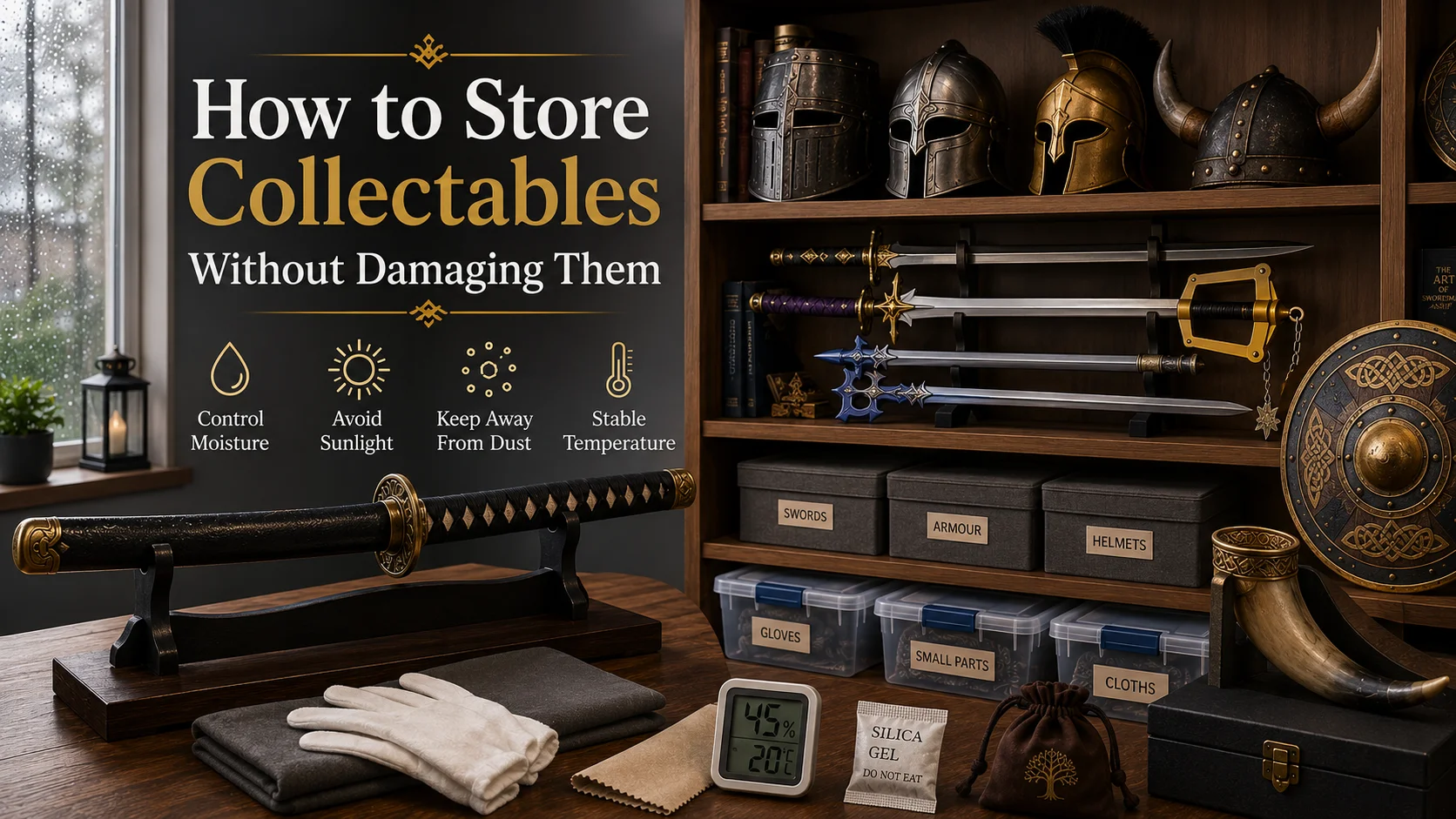
What can damage your collectables? Moisture, humidity, sunlight, dust, heat, and poor storage can slowly cause rust, fading, cracks, or warping. The good news is that most of this damage is easy to prevent with simple storage and care. For collectors in the UK, the weather can make storage a little more challenging. Damp winters, humid summers, older homes, and radiators can all affect your collection.
Whether you have swords, armour, helmets, shields, keyblades, drinking horns, or foam LARP weapons, each item needs the right care. Most damage happens slowly rather than all at once. With the right storage conditions and a few simple habits, you can keep your collectables looking great for years. In this guide, we will look at different materials and explain how to store each one safely.
Why Do Collectables Get Damaged?
Collectables can get damaged because of moisture, heat, sunlight, dust, and changing room conditions. Metal can rust when moisture and oxygen reach its surface, while some finishes may become dull or tarnished over time. Foam can break down when exposed to strong sunlight or heat, causing it to lose its shape and become compressed. Wood naturally absorbs and releases moisture, so frequent changes can lead to swelling, shrinking, warping, or cracks.
In the UK, this can be a bigger concern because homes may become damp during winter but very dry when central heating is running. These repeated changes can put extra stress on materials. Poor handling can also speed up damage. Bare hands leave oils on metal, while unsupported items can bend or lose their shape.
What Are the General Rules for Storing Collectables?
The best place to store your collectables is a clean, dry room with a stable temperature and around 40–55% relative humidity. Try to avoid attics, garages, or unheated sheds because they can become very damp, cold, or hot. Keeping your collection in a comfortable indoor room helps protect it from sudden changes in temperature and moisture. When handling metal items, always use clean, dry hands or gloves. Natural oils and moisture from your skin can stay on the surface and may lead to rust or marks over time.
If you touch a metal blade, gently clean it before putting it back into storage. Keep the original box and packaging whenever possible. The foam inserts and fitted boxes are often designed specifically for that item, making them useful for safe storage and protection from dust and accidental knocks. These basic rules are a good starting point, but metal, wood, and foam need different care. The next sections explain how to store each material properly.
How Should You Store Metal Collectables Like Swords, Armour and Jewellery?
Store metal collectables in a dry, stable room. Even stainless steel can develop spots in damp conditions, while carbon steel needs extra care. For unused carbon steel swords, apply a thin coat of protective oil every few months and gently buff off the excess. Avoid leaving bare blades directly on hard mounts, as pressure points can cause wear over time. Use a scabbard or padded support instead. Armour, helmets, and shields are more likely to get scratches or dents, so padded storage is important. For plated jewellery, keep it away from moisture, perfumes, and lotions, and store each piece in a soft, dry pouch.
1. Stainless Steel Swords and Blades
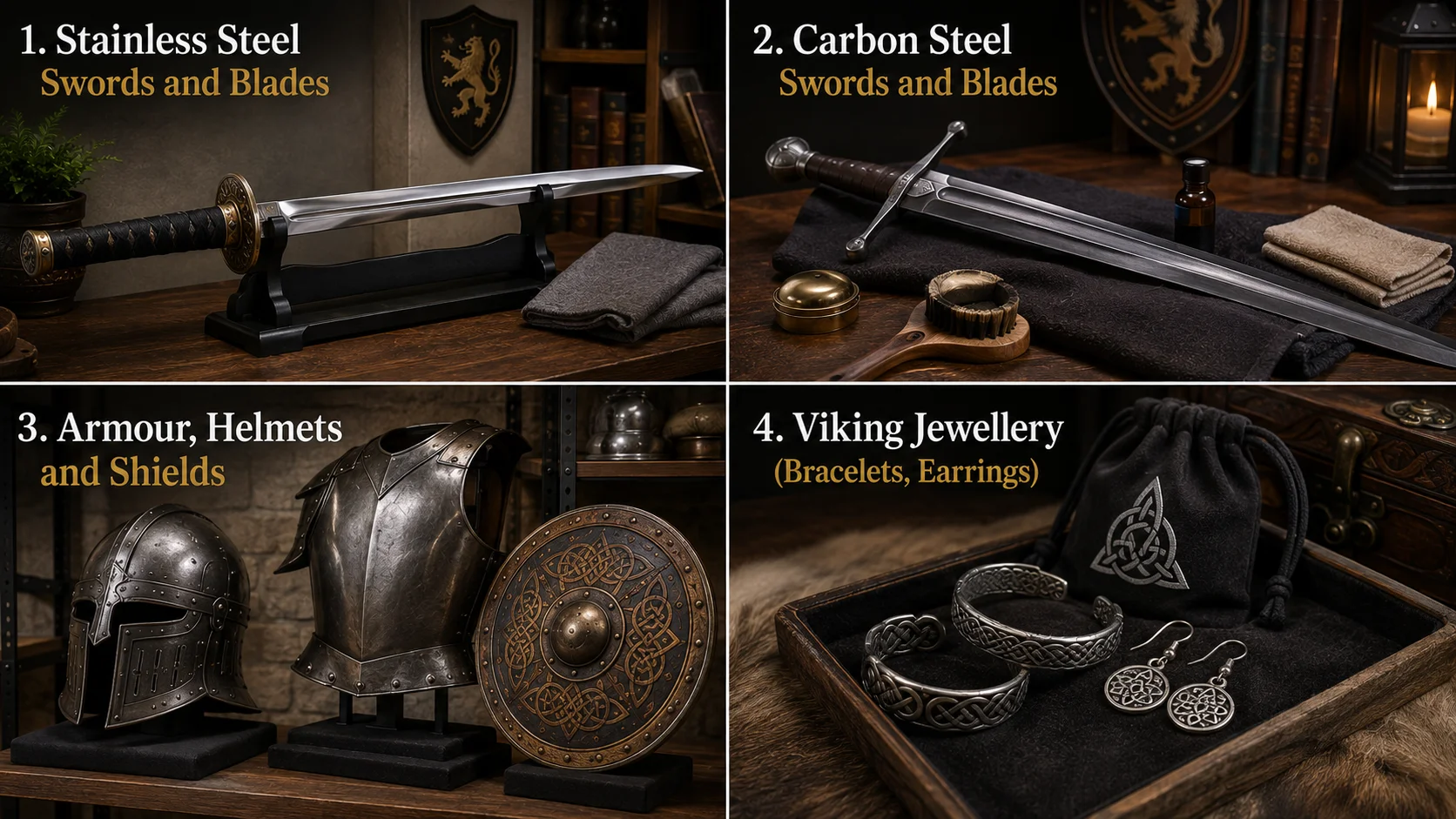
Stainless steel swords and blades are usually the easiest metal collectables to care for. In normal UK indoor conditions, they generally only need a clean, dry wipe to remove dust, fingerprints, and moisture. You do not usually need to oil them regularly.
However, “stainless” does not mean completely rust-proof. Keeping a blade for a long time in a damp room, such as a bathroom or unheated conservatory, can still lead to light spotting. Store your stainless steel sword in a dry room and keep the blade clean and dry to help maintain its finish.
2. Carbon Steel Swords and Blades:
Carbon steel swords and blades need a little more care because they can rust more easily than stainless steel. If your sword is mainly kept on display, apply a thin coat of protective oil every 2–3 months. If you handle it regularly, you may need to oil it more often.
Before oiling, make sure the blade is clean and completely dry. Early signs of oxidation can include light discolouration, small dull patches, or a change in the blade’s shine. If you notice these signs, clean and protect the surface before the problem develops into deeper pitting. Keeping the blade dry and checking it regularly will help maintain its appearance.
3. Armour, Helmets and Shields
Armour, helmets, and shields need protection from scratches, dents, and pressure. Use padded shelves or lined supports, and avoid stacking items. Support each piece at natural contact points to help prevent bending or warping. For larger pieces that do not fit standard cases, consider sturdy freestanding racks or suitable wall-mounted displays with enough space between items.
4. Viking Jewellery (Bracelets, Earrings)
Keep your Viking jewellery in a soft pouch or lined box, and store each piece separately to prevent scratches. Try to keep bracelets and earrings away from water and moisture. It is also best to remove them before showering, swimming, or using perfume and lotion, as these can wear down the plating over time.
How do I stop my Viking jewellery from tarnishing? Keep your jewellery dry, avoid direct contact with perfumes and lotions, and store each piece separately in a soft, dry pouch. These simple steps can help your jewellery stay bright and look good for longer.
How Should You Store Wooden and Foam Collectables Like LARP Gear?
Wood and foam need extra care because UK weather can bring changes in heat and humidity. Foam LARP gear can break down from UV light and heat, causing permanent compression or damage. Keep it away from direct sunlight and radiators. Wooden collectables absorb moisture in humid weather and shrink as the air becomes dry, which can lead to cracks or warping. Store wooden items in a stable room, away from damp areas. After LARP events, let foam gear dry fully before storing it.
1. Foam LARP Swords and Practice Pieces
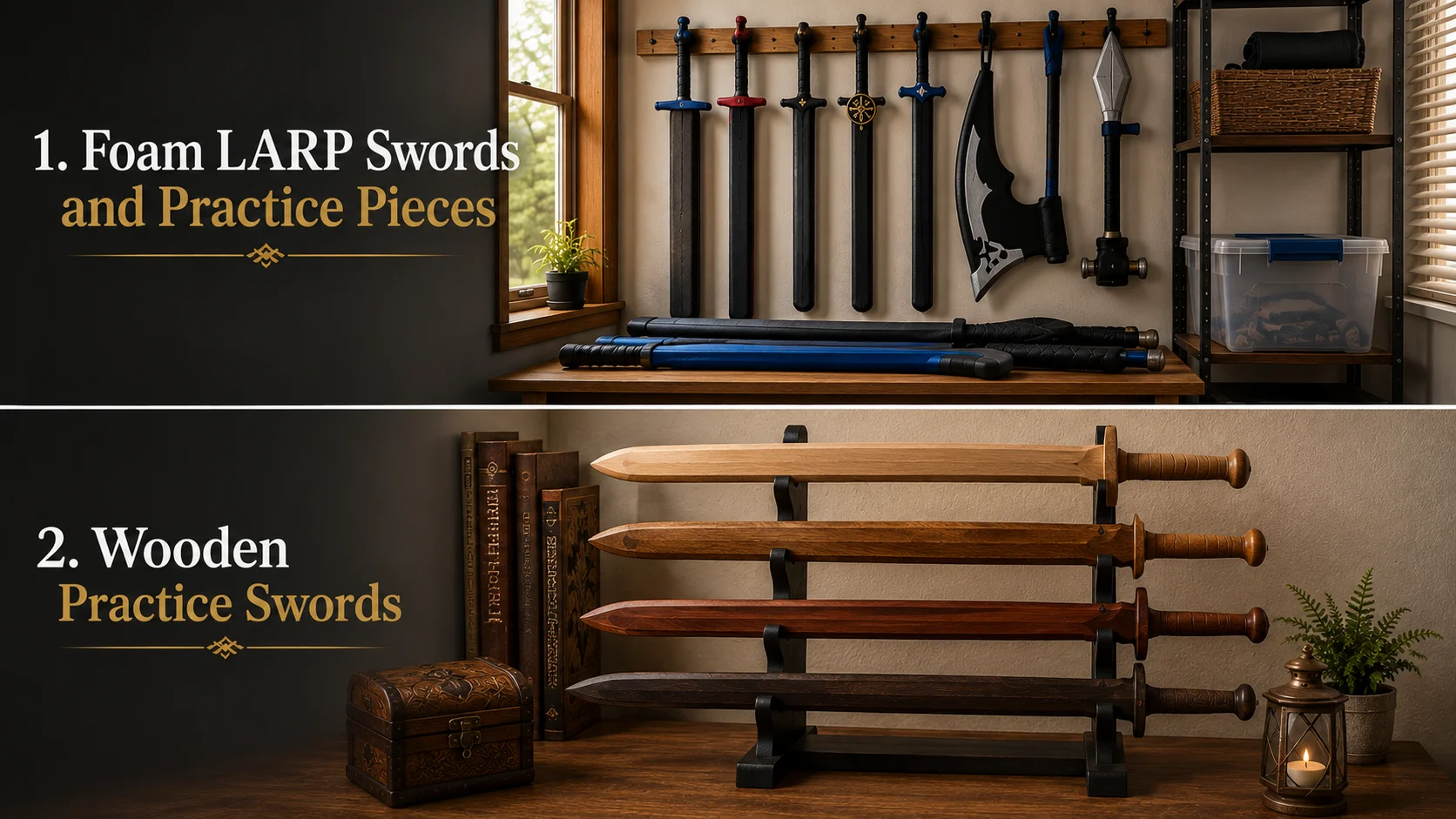
Store foam LARP swords and practice pieces flat or hanging to help them keep their original shape. Avoid tightly coiling, folding, or squeezing them into small bags, as long-term pressure can cause permanent bending. Also, keep them away from heat. Leaving foam gear in a car boot on a warm day can quickly cause it to warp and lose its shape.
What’s the best way to store foam LARP pieces? Keep them flat or hanging in a cool, dry place, away from direct sunlight and heat. After events, let them dry completely before storing them.
2. Wooden Practice Swords
Wooden practice swords need a little extra care to stay in good shape. If the wood is unfinished or has visible bare areas, apply a light coat of suitable wood wax or oil from time to time. Store the sword on a shelf or stand rather than directly on concrete or stone floors, as these surfaces can expose the wood to moisture over time. Keep it in a dry, stable room and away from radiators or damp walls to help prevent warping, shrinking, and cracks.
How Should You Store Painted and Resin Collectables Like Action Figures and Masks?
Painted and resin collectables need protection from strong light, heat, and dust. Direct sunlight and UV exposure can slowly fade painted finishes, while repeated heat changes can make resin more brittle over time. For this reason, keeping these items away from direct sunlight and hot areas is often more important than worrying about small changes in humidity.
If your action figures or masks are not on permanent display, keep the original boxes, stands, and protective sleeves. They provide useful protection from dust, accidental knocks, and unnecessary handling. For cleaning, use a soft brush to gently remove dust instead of wiping with a cloth. This helps protect small painted details and delicate surface finishes.
Should You Display Collectables or Keep Them in Long-Term Storage?
Displaying your collectables lets you enjoy them every day and makes it easier to notice dust, marks, or early signs of damage. However, display areas expose items to light and dust. Long-term storage offers better protection, but items can be forgotten, and small problems may go unnoticed for months.
One thing many collectors overlook is cumulative light exposure. Even indirect daylight can slowly fade painted finishes and discolour foam over the years. When using a display cabinet, think about its position as well as direct sunlight. Keeping it away from windows can help protect your collection for longer.
1. Best Practices for Active Display
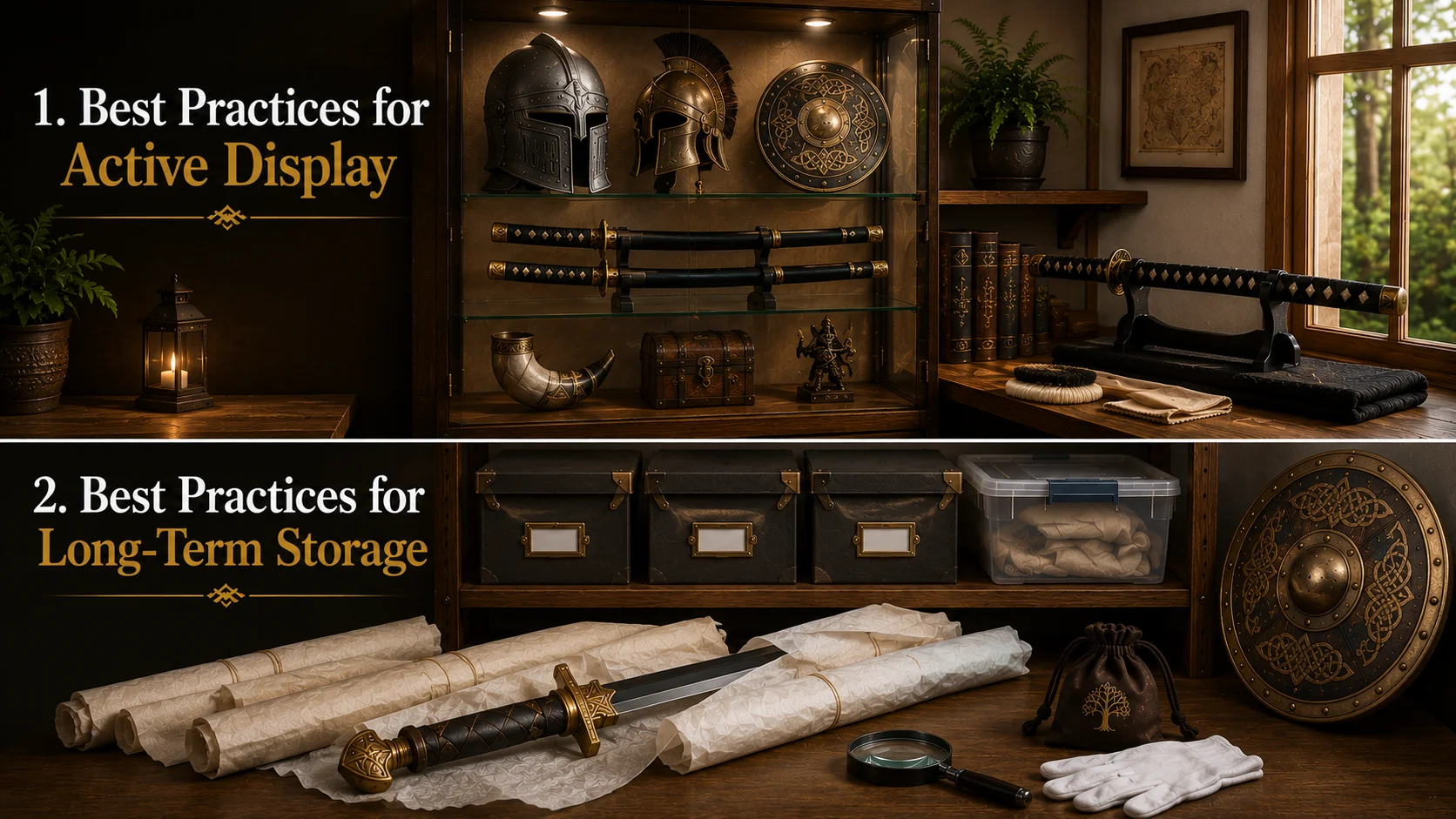
If your collectables have real value, consider using a UV-filtering glass cabinet to help protect them from long-term light exposure. For a simple option, keep displayed items away from windows, especially south-facing windows where they may receive stronger sunlight.
Make regular care part of your normal cleaning routine. When dusting your collection, take a quick look for rust spots, fading, cracks, scratches, or other changes. This simple check makes it easier to notice small problems early and deal with them before they become harder to fix.
2. Best Practices for Long-Term Storage
For long-term storage, wrap collectables in acid-free tissue paper instead of ordinary paper or plastic. Some plastics can release chemicals over time, which may affect metal surfaces, foam, and other materials. Store items in a cool, dry, stable place, away from direct sunlight and heat.
Try to inspect your collection every 3–6 months. Look for rust, discolouration, cracks, moisture, or changes in shape. Finding small problems early makes them much easier to manage. How often should I check on stored collectables? A quick inspection every 3–6 months is a good routine. It helps you spot early signs of corrosion, foam damage, or moisture before they become more serious.
What Are the Most Common Storage Mistakes to Avoid?
Even with good storage habits, a few common mistakes can slowly damage your collection. Avoid these simple problems:
- Storing items in damp places: Garages, sheds, and unheated lofts can have high moisture levels and changing temperatures, which can lead to rust, mould, warping, or other damage.
- Leaving items in sunlight: Direct and prolonged indirect sunlight can fade painted finishes and weaken foam over time.
- Using household cleaning sprays: Avoid general-purpose sprays on metal, as some contain ammonia or acidic ingredients that can remove protective oils and increase the risk of corrosion.
- Stacking items without padding: Heavy or poorly supported items can cause scratches, dents, pressure marks, or warping.
- Skipping regular checks: This is one of the easiest mistakes to make. A quick inspection every 3–6 months can help you spot small problems before they become serious.
Final Thoughts:
Taking care of your collectables does not have to be difficult. Most damage happens slowly because of moisture, heat, sunlight, or poor storage, but simple habits can help prevent many of these problems. Keeping items dry, protecting them from direct sunlight, using the right support, and giving them occasional care can make a big difference.
Remember that every material needs slightly different care. Metal may need cleaning or occasional oiling, while wood and foam need protection from changing conditions, heat, and moisture. A few minutes of regular care can help your collectables keep their appearance and value for much longer. For more item-specific advice, visit our Product Care and Warranty pages. If your piece needs repair, rewrapping, or restoration, you can also explore our Custom Orders service.