
Blog
Rambo’s Knife: How First Blood Transformed Film History and Knife Collecting Forever

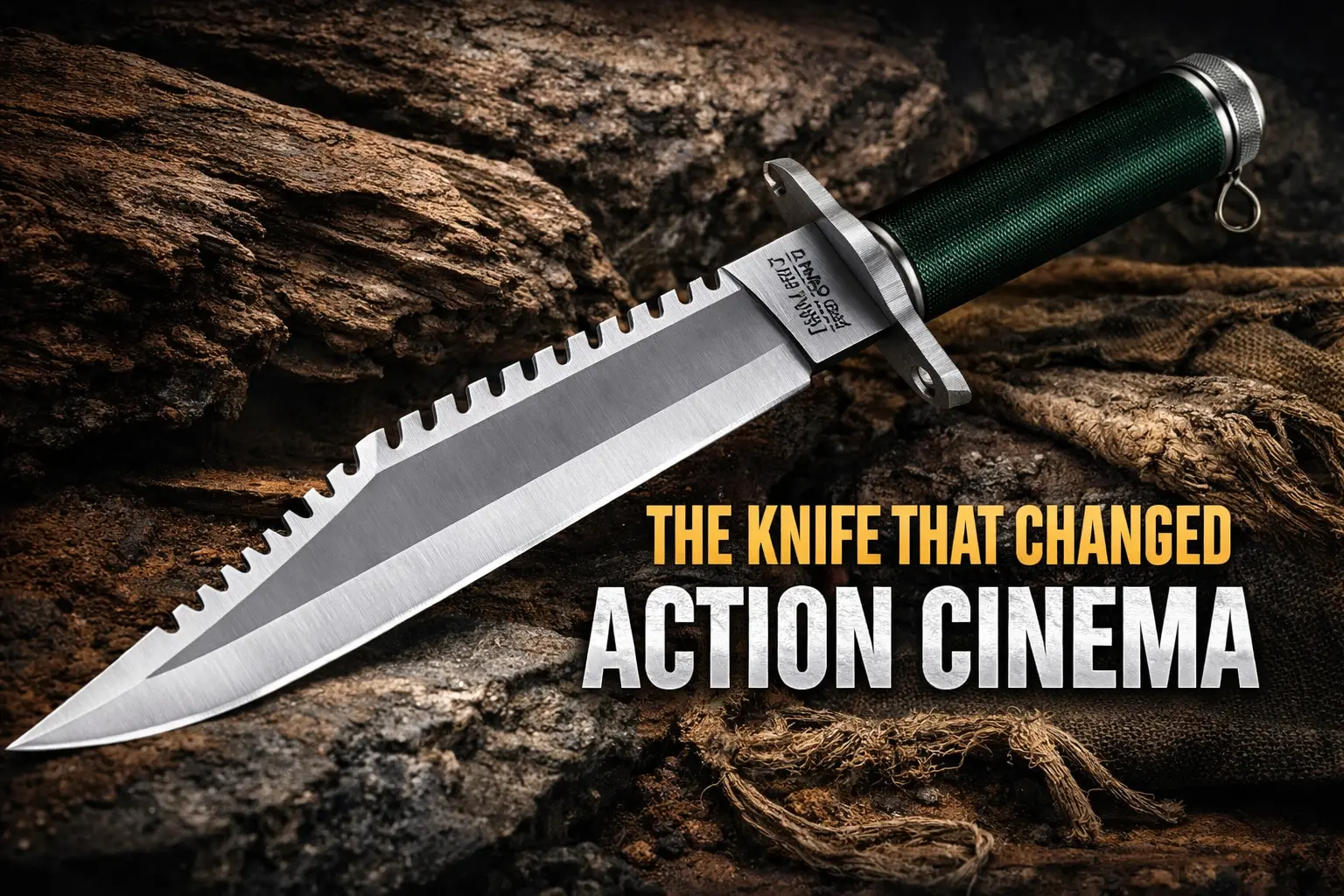
The knife carried by Rambo in First Blood is more than a film prop it is a powerful symbol of cinema history. When the film was released, this iconic knife instantly captured attention and became part of the movie’s identity. Its bold design, survival-inspired features, and strong on-screen presence helped redefine how audiences viewed knives in films, turning it into a lasting cultural icon.
Over time, the First Blood knife inspired a global collecting culture, especially among film fans and collectors in the UK who appreciate movie memorabilia with meaning. Rather than being seen as a purely functional tool, the knife is admired as a piece of cinematic art and an engineering marvel. Its detailed craftsmanship, thoughtful design, and connection to a legendary character make it a timeless collectible that continues to influence film appreciation and knife collecting even today.
Survival Knives in Cinema Before Rambo
Before First Blood, knives in films were usually shown in a very simple way. From the 1960s to the early 1980s, action and war films in both American and British cinema treated knives mainly as basic tools or close-combat items. They were used for fighting or survival scenes, but they were not the focus of the story. In American war films and westerns, knives often appeared as part of a soldier’s or frontiersman’s gear, without any special features or detailed attention. British cinema, including classic commando and military films, showed knives in a similar way, practical, realistic, and quickly forgotten once the scene ended.
Although many early war films, westerns, and British commando movies included knives, none of them created a lasting cultural impact. These knives were never highlighted as multi-functional survival tools, nor were they designed to stand out. It wasn’t until Rambo appeared on screen that a knife became a symbol, a character feature, and a true cinematic icon.
1. The Limited Role of Knives in 1960s-70s Action Films
In action films of the 1960s and 1970s, knives were usually secondary props. Most attention went to guns and hand-to-hand combat, while knives appeared only occasionally. They were often shown as last-resort tools, used when other options were not available.
British war films followed the same pattern. Military knives appeared as practical gear, but they were not highlighted or given much importance on screen. Knives served their purpose, but they were never the focus of the story or a memorable symbol for audiences.
2. Bowie Knives and Military Surplus: The Standard Before Innovation
Before Rambo, most knives in films were standard military surplus or simple Bowie knife designs. They were practical, but lacked any special survival features or clever design for on-screen use.
In British cinema, knives like the Fairbairn-Sykes fighting knife or other standard-issue military knives often appeared in war and commando films. They were shown as tools soldiers carried, but the movies rarely focused on their unique qualities or survival capabilities. Knives were functional props, not stars of the story, and their designs stayed simple and conventional.
Jimmy Lile: The Knifemaker Who Changed Everything
Jimmy Lile was a skilled knife maker from Russellville, Arkansas, who created the famous First Blood knife in 1981. Unlike regular movie prop makers, Lile was a real craftsman who believed knives should work well first, look good second. He’d been making strong, reliable knives for soldiers and outdoor lovers since the 1960s. When Sylvester Stallone asked him to design a survival knife for his character John Rambo, Lile took the job seriously. Stallone wanted a big knife with an empty handle to store matches and fishing line.
Lile worked with Stallone on every part, including how long the blade should be, what steel to use, and working saw teeth that actually cut. He hand-made each knife in his Arkansas workshop using good materials and smart design. Lile treated this movie job like all his other work: make it real, make it useful, make it right. His focus on creating a true survival tool, not just a fake prop, made it legendary. Readers who want to explore the complete history of Rambo knives, from Jimmy Lile’s original survival blade to modern designs seen in later films, can understand how each knife evolved with the character.
1. From Coal Miner’s Son to Master Craftsman
Jimmy Lile grew up in Arkansas as a coal miner’s son and made his first knife at just 11 years old. He worked different jobs before following his passion for knife making. In 1971, he finally became a full-time knife maker, opening his workshop in Russellville, Arkansas.
Lile followed traditional American bladesmithing methods, hand-forging each blade with care. He learned from old craftsmen and developed his own style focused on making tough, practical knives. His work honored American knife-making traditions while creating tools people could truly depend on for survival and hard use.
2. Lile’s Design Philosophy: Function Over Flash
Jimmy Lile believed knives should work perfectly before looking pretty. He focused on making practical tools that could handle real jobs, cutting, chopping, and surviving tough conditions. Every knife he made had to be useful first, decorative second.
This practical approach made him perfect for the Rambo knife project. Like British bladesmiths from Sheffield who made strong working tools for centuries, Lile valued quality steel and honest craftsmanship. Sheffield’s tradition of making reliable knives for workers matched Lile’s American style both believed in creating tools that lasted and performed when people needed them most.
The First Blood Knife: A Revolutionary Design
The original Rambo First Blood part 1 knife wasn’t just a movie prop—it was a complete survival system packed into one tool. Jimmy Lile designed every feature to actually work, not just look good on screen. The knife had a hollow handle for storing supplies, saw teeth for cutting, built-in screwdrivers, and a compass cap.
Each element served a real survival purpose. This groundbreaking design combined engineering brilliance with cinematic appeal. Lile created a tool that could genuinely help someone survive in the wilderness while also looking dramatic enough to captivate movie audiences worldwide. It changed how people thought about survival knives forever.
1. The Hollow Handle Innovation: More Than Just Storage
The waterproof hollow handle was the knife’s most innovative feature. Inside, Rambo stored essential survival items: waterproof matches, fishing line, sewing needles, thread, and a compass in the cap. The blade measured approximately 30.5cm (12 inches) long, making it substantial for heavy tasks.
This design influenced countless future survival knives, though Lile engineered it carefully to maintain strength. The threaded cap sealed everything tight and dry. This wasn’t just storage, it was a complete survival kit hidden inside the handle, giving users everything needed for emergencies in one compact tool.
2. Saw Teeth and Screwdrivers: Every Feature Had a Purpose
Lile added 14 functional saw teeth along the blade’s spine that could actually cut rope, wood, and bone, not just decoration. The guard featured screwdriver tips on both ends for tightening screws or prying tasks. Each feature solved real survival problems: the saw for cutting branches to build shelter, the screwdrivers for equipment repairs.
Lile’s engineering thinking was practical every addition had to earn its place by serving multiple survival scenarios. Nothing was there just for looks. This multi-tool approach made one knife do the work of several separate tools in the wilderness.
3. Materials and Construction: Built for Authenticity
Lile chose D2 tool steel for its toughness and edge-holding ability under hard use. He wrapped the handle with approximately 11 metres (36 feet) of paracord, which could be unwound for making shelters, traps, or emergency repairs. Every knife was hand-crafted in his Arkansas workshop with meticulous attention to detail.
Unlike typical movie props made from soft aluminium, Lile built these knives to actually function. He tested the design thoroughly, ensuring it could handle real survival tasks like chopping, digging, and cutting. His craftsmanship meant each knife was a genuine survival tool that happened to be in a movie.
How First Blood Changed Action Cinema Forever
When First Blood was released in 1982, it made a strong impact on action cinema, especially in the UK. British cinemas saw solid box office success, and UK audiences connected with the film’s serious tone and realistic survival themes. Unlike many American action films of the time that focused on big action and heroes, First Blood felt more grounded and emotional, which appealed to British viewers.
UK media praised the film for its intensity and focus on self-reliance rather than flashy action. Compared to other action films shown in UK cinemas, First Blood stood out for its survival focus. The knife quickly became a popular collectible in the UK and worldwide, helping grow interest in film memorabilia and cinema-inspired collecting.
The Rambo Knife Series Evolution Through Five Films
Across all five Rambo films, the knife design changed to match the story and the style of each movie. In First Blood (1982), the knife was about 36 cm long and designed as a realistic survival knife. It suited Rambo’s need to survive alone in the wilderness. In Rambo: First Blood Part II, the knife stayed almost the same, with only small visual changes to keep the look familiar.
In Rambo III, the knife became much larger. Designed by Gil Hibben, this Bowie-style knife was around 46 cm long and matched the bigger action scenes of the late 1980s. Collectors looking for a rambo knife for sale often start with this design Collectors looking for a Rambo knife for sale often start with this design In Rambo (2008), Rambo used a machete-style blade, showing a harsher survival style. In Last Blood (2019), the smaller “Heartstopper” knife fit the darker, close-combat feel of modern action films. A detailed Rambo knife design comparison between First Blood, First Blood Part II, and Rambo III helps collectors decide which version best matches their collection style.
1. Rambo: First Blood Part II – Refining the Original (1985)
In Rambo: First Blood Part II, the knife stayed very close to the original design from First Blood. Jimmy Lile made only small changes, such as a matte black finish, to better suit jungle warfare and reduce glare.
The core design remained the same because it already worked well for survival scenes. Keeping the rambo first blood part 2 knife familiar helped maintain continuity and showed that Rambo still relied on the same trusted survival skills, even in a new and harsher environment.
2. Rambo III – Gil Hibben’s Combat Bowie (1988)
Rambo III introduced a major change with a new knife designed by Gil Hibben. This time, the Rambo 3 Bowie knife abandoned the hollow handle and used a solid full-tang construction. The blade was much larger, around 33 cm (13 inches), and clearly built for combat.
The Afghan desert setting influenced this shift, as the film focused more on direct fighting than survival. The bigger, heavier Bowie knife matched the bold action style of late 1980s cinema.
3. Rambo (2008) – The Brutal Machete Era
In Rambo (2008), the knife design changed again to match the film’s darker and more violent tone. Rambo used a cleaver-machete hybrid, designed for raw power and efficiency. Set in the jungles of Burma, the blade reflected harsh survival and close combat.
This Rambo 4 machete was less about style and more about pure function. It’s heavy, brutal look perfectly suited to the gritty atmosphere and shows an older Rambo facing a much more unforgiving world.
4. Last Blood – The Heartstopper (2019)
In Last Blood, Rambo carried the “Heartstopper” knife, designed by Dietmar Pohl. Measuring about 38 cm (15 inches), this hunting-style knife marked the final evolution of the series. The design reflected a return to American settings and more personal combat.
Unlike earlier survival or combat blades, this Rambo Heartstopper knife felt grounded and traditional. Its simple but deadly design matched the film’s darker mood and showed Rambo as a lone figure relying on experience rather than survival gear.
Rambo’s Influence on British and International Action Cinema
Rambo’s success in the 1980s changed how action films were made in the UK, Europe, and America. British, European, and American filmmakers began including survival knives inspired by Rambo’s realistic and functional blade. Films popular in UK cinemas started showing soldiers, adventurers, and heroes using knives in more dramatic and detailed ways.
Each film tried to create its own iconic blade, giving characters a memorable tool that stood out on screen. This trend shifted knives from simple tools to important symbols of courage and skill. Rambo’s influence made survival knives central to action cinema and sparked international interest in collectible cinematic knives.
1. British Action Films and the Survival Knife Trend
In the 1980s, British action and thriller films started including knives similar to Rambo’s survival blade. UK productions showed soldiers and adventurers using knives as essential tools for survival or combat. Audiences responded positively, appreciating the realistic design and practical use on screen.
These knives helped create tension and excitement while making characters feel more skilled and resourceful. British filmmakers began treating the survival knife as more than a prop, giving it a symbolic role in action sequences.
2. Commando and the Jack Crain LS1: Following Rambo’s Template
Arnold Schwarzenegger’s 1985 film Commando featured a hollow-handle survival knife designed by Jack Crain, clearly inspired by Rambo. The knife became a visual highlight in the movie’s combat scenes.
When the film released in UK cinemas, audiences enjoyed the mix of intense action and realistic survival gear. The Crain knife reinforced the idea that the hero’s blade could be both practical and iconic, following the template Rambo had set earlier in the decade.
3. The Tracker Knife in The Hunted: Modern Survival Design
In 2003, The Hunted introduced Tom Brown’s Tracker knife, showing how survival knife design had evolved for modern cinema. Unlike earlier knives, the Tracker was sleeker, lightweight, and highly functional, reflecting updated survival techniques.
The film was available in UK markets, where audiences appreciated the realistic depiction of survival tools. This knife carried forward the legacy of cinematic survival knives, combining practicality with memorable on-screen presence.
4. European Action Cinema’s Response:
European action films also responded to Rambo’s influence by including survival knives in their stories. Many films distributed in UK cinemas adopted similar designs, giving heroes distinctive blades for adventure and combat.
While not all became as iconic as Rambo’s knife, these films helped spread the survival knife trend across international action cinema, making it a recognisable symbol of skill, resourcefulness, and cinematic excitement.
The Collector’s Market: How It Enhanced Rapidly?
After First Blood became a hit, the collector’s market for film memorabilia, especially survival knives, grew quickly. In the UK, fans wanted iconic knives from the Rambo series, turning them into highly sought-after items. Speciality shops, auctions, and conventions began offering rare knives and movie collectibles, making collecting more popular than ever.
To meet demand, companies produced accurate replicas and reproductions of Rambo’s knife, using the right materials and sizes. These made it easier for fans to own a piece of cinema history. The combination of iconic design, nostalgia, and accessibility helped the collector’s market expand rapidly, both in the UK and worldwide.
1. Market Trends in the UK
After the release of First Blood, British fans became increasingly interested in collecting movie memorabilia, especially survival knives. UK collectors sought out replicas, props, and limited editions, creating a strong market for cinematic collectibles.
Auctions, specialty stores, and fan conventions began offering rare items, and the popularity of survival knives helped drive this trend. The film inspired a new generation of collectors who wanted not just knives, but pieces of cinematic history to display and treasure.
2. Replicas Reproductions
To meet growing demand, companies started producing high-quality replicas of Rambo’s knife and other famous survival knives. These reproductions were often accurate in size, materials, and design, making them appealing to collectors in the UK and internationally.
The rise of replicas also made it easier for fans to own iconic blades without hunting for rare originals, further boosting the collector’s market. Over time, cinematic knives became both display pieces and symbols of action cinema history.
Modern Impact: How Rambo Changed the Overall Knife Collection Industry
Rambo’s First Blood changed more than cinema, it shaped the way survival and tactical knives are designed today. Its strong, practical design inspired collectors and outdoor enthusiasts around the world, including the UK. Modern survival knives carry Rambo’s DNA: rugged construction, sharp edges, and multi-purpose features that combine style with real functionality.
From camping gear to collector’s displays, these knives balance practicality with iconic appeal. Even today, UK makers and enthusiasts look to the Rambo knife as a blueprint, showing how a cinematic tool became a real-life standard for durability, versatility, and unforgettable design.
1. Modern Bushcraft Knives for UK Enthusiasts:
UK bushcraft knives today blend survival functionality with legal outdoor use. Blade lengths are often designed under UK carry limits, while fixed blades give stability for chopping and carving, and folding knives offer safe portability. Handles are durable and easy to grip, and blades are sharp and low-maintenance.
Many designs include small survival features, inspired by the original Rambo knife, making them perfect for camping, hiking, and everyday outdoor adventures. Collectors and bushcraft fans enjoy their practicality and classic survival-inspired style.
2. The Evolution of Multi-Tool Design:
Rambo’s knife inspired the modern idea of multi-functional survival tools. Today, UK outdoor enthusiasts enjoy multi-tools that combine knives, fire starters, screwdrivers, and compasses in one compact device. These tools reflect the same clever design approach: practical, durable, and ready for anything.
Just like the First Blood knife, every element has a purpose. Whether camping, hiking, or exploring, modern multi-tools carry Rambo’s legacy of versatility, showing how a film prop became a real-world inspiration for functional and collectible survival gear.
Where to Buy Rambo Knives: A Collector’s or Fans Choice?
When choosing a Rambo knife, the right place to buy depends on whether you are a serious collector or a passionate movie fan. Collectors usually search for well-crafted replicas that closely follow the iconic First Blood design, with attention to blade shape, handle style, and overall finish.
For UK buyers, specialist replica retailers like Swords Kingdom are a reliable choice. The store focuses on movie-inspired collectibles, offering Rambo-style knives designed for display, cosplay, and themed collections. Fans also benefit from clear product descriptions, detailed images, and UK-friendly delivery. Buying from a trusted replica store ensures quality, authenticity, and confidence in your purchase.
Conclusion:
Rambo’s knife from First Blood is far more than a memorable film object. It represents a turning point in cinema history, where a survival knife became a symbol of character, storytelling, and realistic design. Through Jimmy Lile’s craftsmanship, the knife set new standards for how tools were shown on screen, blending real engineering with cinematic impact. This approach changed how action films treated survival gear and influenced knife design for decades.
In the UK and worldwide, the Rambo knife helped grow a strong collecting culture focused on film history and meaningful design. Today, these knives are valued as museum-quality collectibles rather than simple items. When collected responsibly and within UK legal guidelines, they stand as lasting examples of craftsmanship, innovation, and a defining moment in action cinema.